

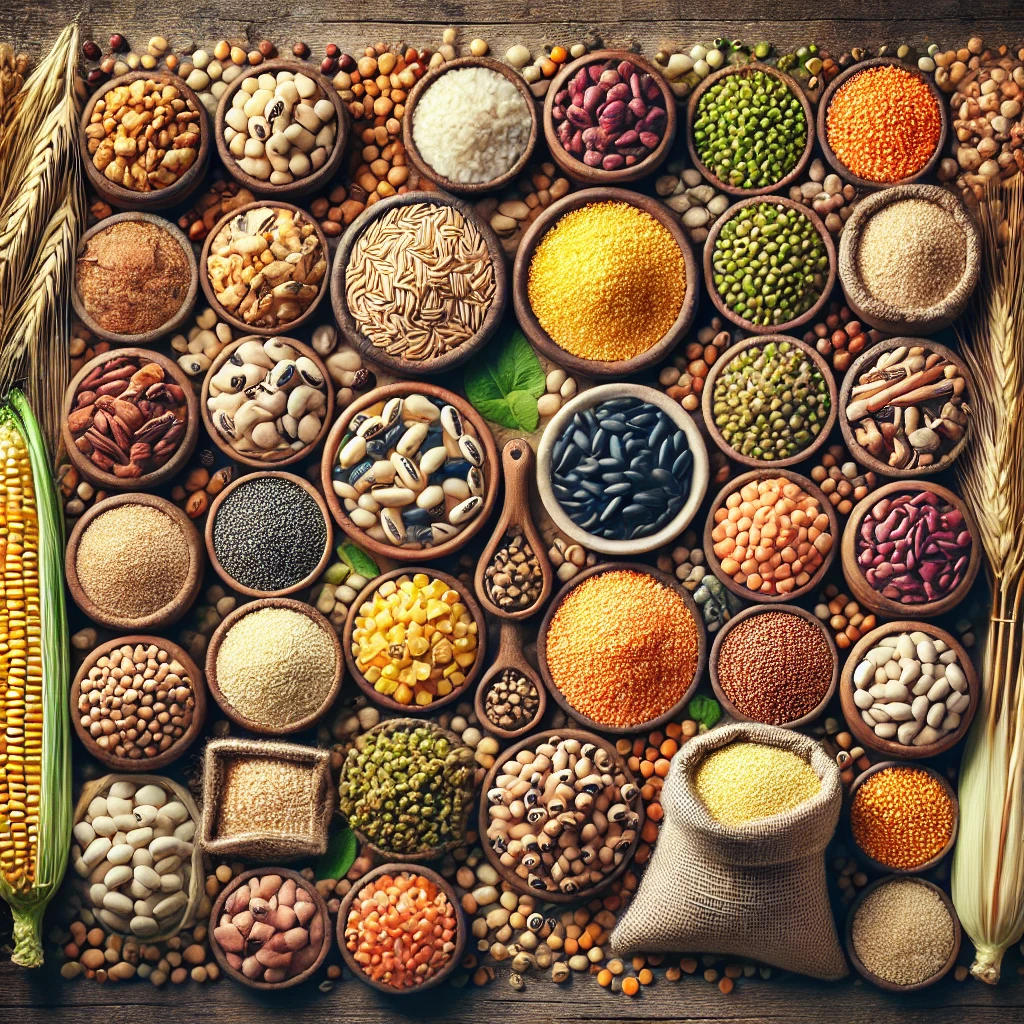


Description
Cereals, Pulses and Millets
Cereals, pulses, and millets are important food groups with distinct nutritional benefits:
1. Cereals
These are staple grains that provide carbohydrates, fiber, and some protein. Examples:
- Wheat – Used for bread, pasta, and rotis.
- Rice – A global staple, available as white, brown, and red varieties.
- Maize (Corn) – Used in tortillas, popcorn, and breakfast cereals.
- Barley – Rich in fiber, often used in soups and malted drinks.
- Oats – A great source of beta-glucan, which helps in cholesterol control.
2. Pulses
Pulses are dried legumes rich in protein, fiber, and minerals, essential for vegetarian diets. Examples:
- Lentils (Masoor, Moong, Toor, Urad, Chana, etc.) – Used in dals and soups.
- Chickpeas (Kabuli & Desi) – Used for hummus, chana masala, and salads.
- Peas (Green, Yellow, and Split Peas) – Used in soups and snacks.
- Kidney Beans (Rajma), Black Beans, and Mung Beans – Rich in iron and fiber.
3. Millets
Millets are ancient grains with high nutritional value, gluten-free, and excellent for diabetics. Examples:
- Ragi (Finger Millet) – High in calcium, great for porridge and rotis.
- Bajra (Pearl Millet) – A winter staple, used for bhakri and khichdi.
- Jowar (Sorghum) – Used for rotis and gluten-free baking.
- Foxtail Millet & Little Millet – Light and easy to digest, good for weight loss.
- Barnyard Millet & Kodo Millet – Low glycemic index, suitable for diabetics.


Reviews
There are no reviews yet.